
A century ago, a Victorian painting showed what care was supposed to be: a doctor's full attention on the person in front of him. A new generation of companies is using technology to hand that attention back, from the exam room to the patient's home to the maze of a serious diagnosis.
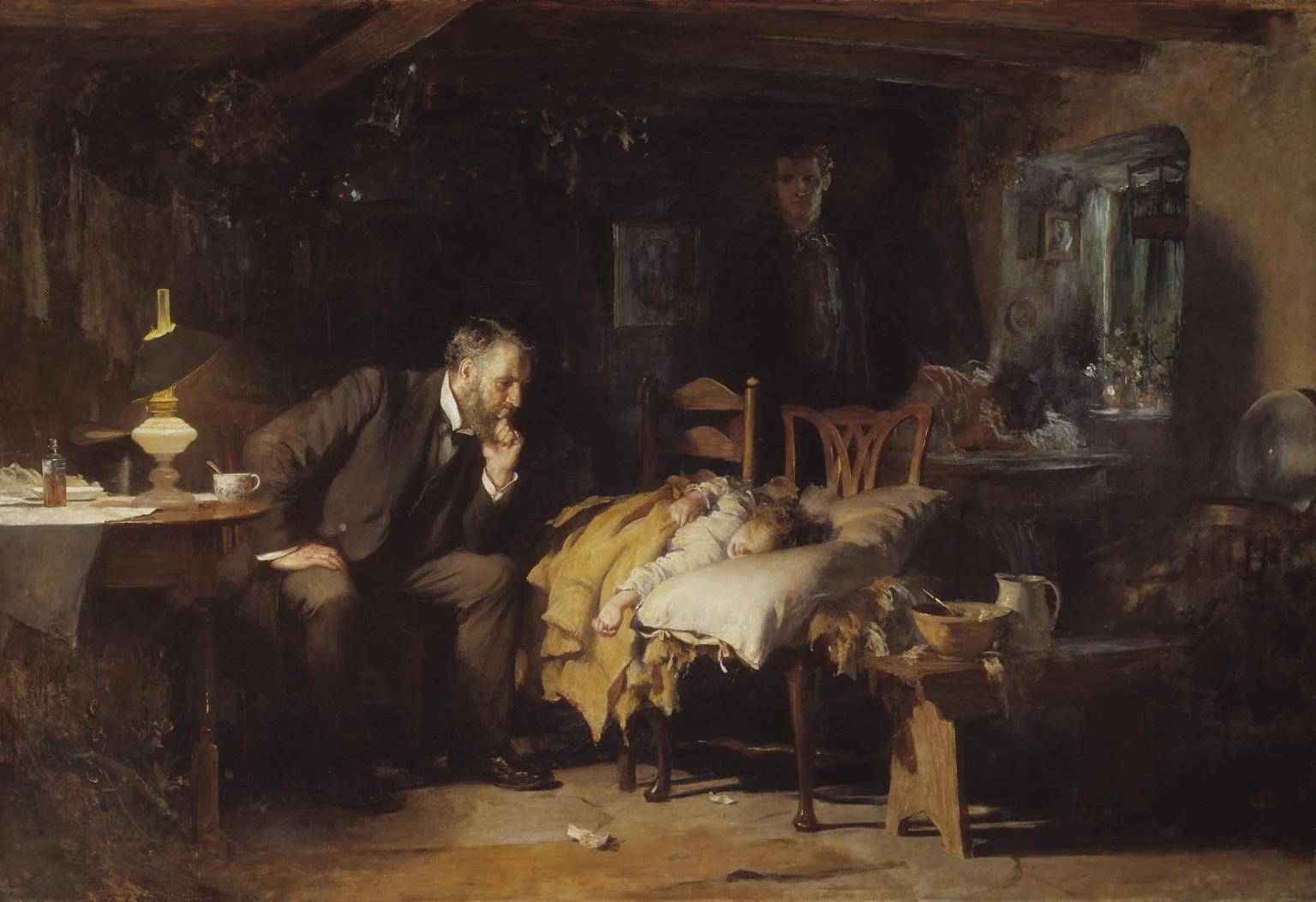
The Doctor, Sir Luke Fildes, 1891. Tate Britain.
There's a painting I was introduced to years ago at athenahealth, and it's shaped how I think about technology in healthcare ever since. It's called The Doctor, painted by Sir Luke Fildes in 1891. A physician sits at a sick child's bedside, watching her through the night while the parents hover in the background. What matters is what Fildes left out. No instruments. No devices. Just a lamp and a basin of water to cool the fever. The doctor's whole treatment is his attention.
I think about that painting a lot. For more than a century it's stood in front of medicine as a picture of what we're supposed to be. Presence. Someone who sees you.
“The doctor's whole treatment is his attention.”
Then somewhere in the last hundred years, we let a screen slide into the room. You know the scene. The doctor's eyes on the monitor, not on you. Your questions answered to a keyboard that's getting more eye contact than you are. You leave with a printout and the feeling that a person was in the room but never quite with you. The fear that technology is making medicine colder one screen at a time sits under every conversation health systems are having about AI right now. It's a fair fear. It's also half the story.
Because the companies I find myself rooting for are doing the opposite: they use technology to put the person back in the room, clearing out whatever was crowding them out to begin with.
It's tempting to sort these companies by their tech. AI or not. App or not. That tells you nothing worth knowing. The better question is less obvious: what human thing is each one trying to protect? Ask it that way and the same instinct turns up again and again, in three places along the way.
The people who care for you
Start with the people in the room.
First, the clinician. Ambient scribes like Suki and Abridge “sit in” on the visit and turn the conversation into the medical note, so the doctor never has to look away to type. Two good things happen, and they're worth keeping separate. During the visit, the doctor watches the patient instead of the chart. After hours, the "pajama charting" fades, that nightly ritual of finishing notes at the kitchen table long after the kids are asleep. Suki reports that its assistant cut burnout by more than half in a group of primary care doctors. That number's really two wins wearing one coat: better attention in the room, and a life back outside it. The funny part is that the product pulling this off is unmistakably AI. Turns out "more human" and "more artificial intelligence" were never enemies. The machine takes the typing so the person doesn't have to.
“Turns out ‘more human’ and ‘more artificial intelligence’ were never enemies.”
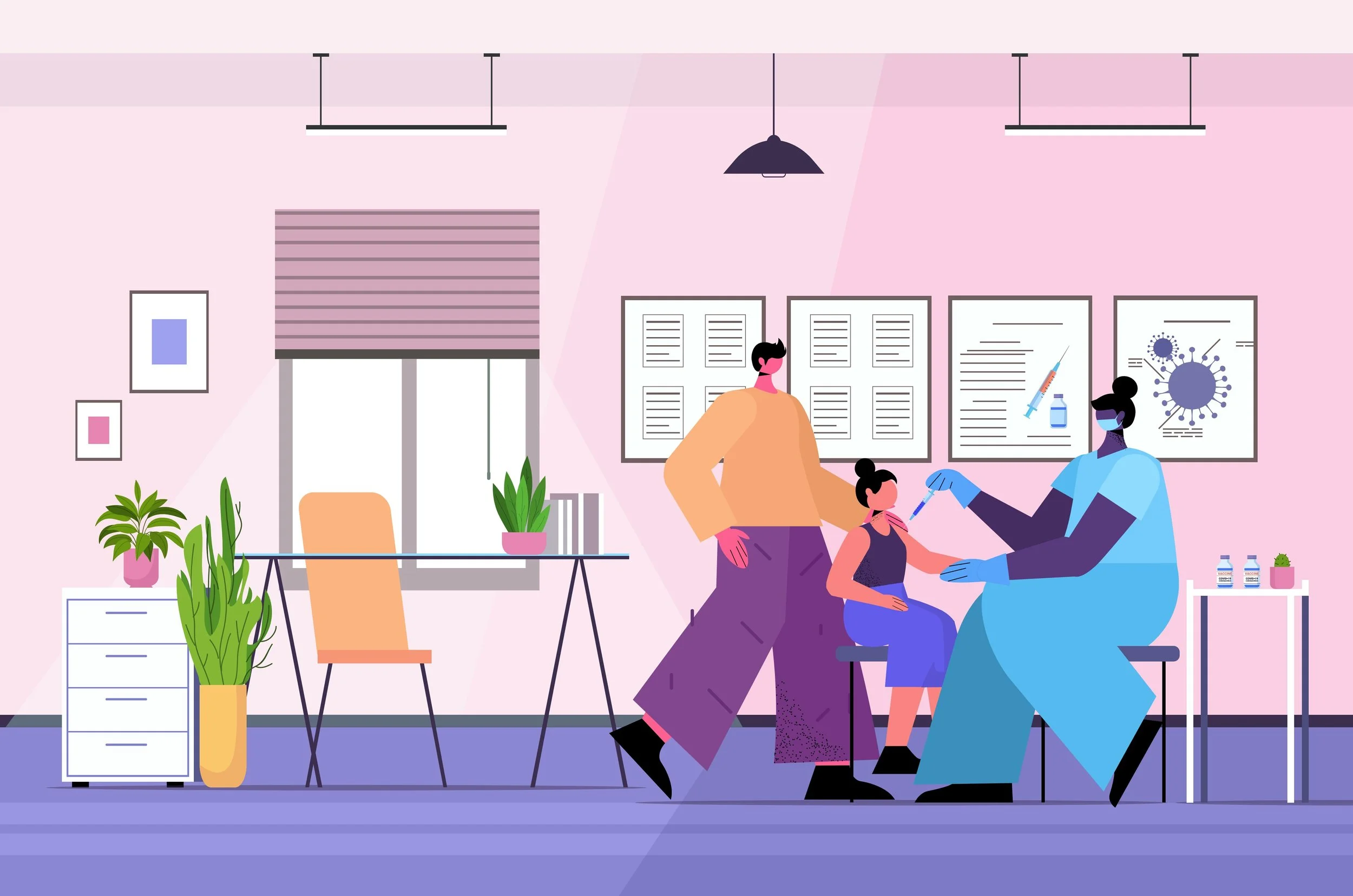
Ambient documentation lets the visit stay a conversation.
Second, the team around the clinician. A good doctor was never the whole story, and companies like Mahmee build out the rest of it. From early pregnancy through the months after birth, a mother gets wrapped in a standing team: an OB or midwife, nurses who stay with her across the whole journey, a lactation consultant, a doula. The point isn't to slice the work into lanes, one person for medicine and another for feelings. The good ones all do a little of everything. A nurse talks her down at 2 a.m. A doula catches the warning sign everyone else was too rushed to see. This matters most for Black and Indigenous mothers, who die in childbirth at far higher rates than white mothers, often because warning signs get dismissed. A team that stays alongside you the whole way is harder to wave off. The technology doesn't replace any of these people. It gets them in the room together and keeps them there.
Care beyond the exam room
Now widen the frame from the people to the care itself.
For a hundred years we drew a line around the exam room and filed everything on the far side of it under "social services." Food. Housing. Loneliness. A ride to the appointment. Real forces on whether you get better, treated as somebody else's department. A handful of companies are erasing that line and writing the outside world back into the treatment plan.
Take food. A doctor who suspects your diet is feeding your diabetes can now do more than say "eat better" and move on. Through a service like Foodsmart, they refer you to a registered dietitian, the same way they'd refer you to any specialist, and the referral comes with more than advice. The dietitian meets you over video, learns how you shop and cook, and helps turn "eat better" into things you'll actually do this week. Depending on your plan, it can come with discounted groceries or help signing up for food assistance. Season Health runs a tighter, more clinical version of the same idea, matching you with a dietitian for condition-specific care and, when your coverage allows, medically tailored meals. Neither one hands you a list of foods to avoid and calls it a day. Both are betting that lasting change comes from someone who knows what's in your cabinet, what you can afford, and how hard it can be to change how you eat.
Food's the easiest to picture, but the move repeats. SocialRx lets a clinician prescribe the things we used to call nice-to-have and now know are medicine: a dance class, an afternoon outside, a museum membership, a way back into a community. Loneliness does real damage, on a timeline any cardiologist would recognize. Papa sends a person to an older adult's door for company and a hand with daily life, and it turns out the visit was the medicine all along. The software just books it. The exam room still matters. It's just not the whole story. What ties these companies together is a simple wager: for a lot of people, the thing that moves their health is sitting outside the clinic, and reaching it takes a person who can walk them there.
Treatment plans that now include groceries, company, and a ride.
Navigating complex care
Then there's the stretch nobody's ready for.
Some diagnoses don't just make you sick. They drop you into a maze. A serious illness arrives with a second full-time job attached: reading pathology reports, choosing between specialists who don't talk to each other, fighting with insurance, making decisions that frighten you during the worst weeks of your life. Plenty of people lose more than their health in there. They lose their footing, their sense of who they are. And the system doesn't always meet them. In one American Cancer Society survey, more than a quarter of patients whose cancer first showed up as symptoms said those early concerns weren't taken seriously. You work up the nerve to say something's wrong, and it doesn't land.
This is where a human guide stops being a luxury. Thyme Care builds one for cancer. A member gets a 24/7 oncology-trained team: nurse navigators, social workers, palliative and geriatric specialists, people who pick up when you call, chase down the doctors who aren't talking to each other, untangle the bills that could bankrupt you, and stay with you from diagnosis through survivorship. Some of the most important work they do has nothing to do with medicine: helping someone hold onto their identity while the illness tries to take it. There's a serious data platform under the hood, flagging who's slipping and when. But what the patient feels is older than any software: someone who knows your name is in your corner.
“What the patient feels is older than any software: someone who knows your name is in your corner.”
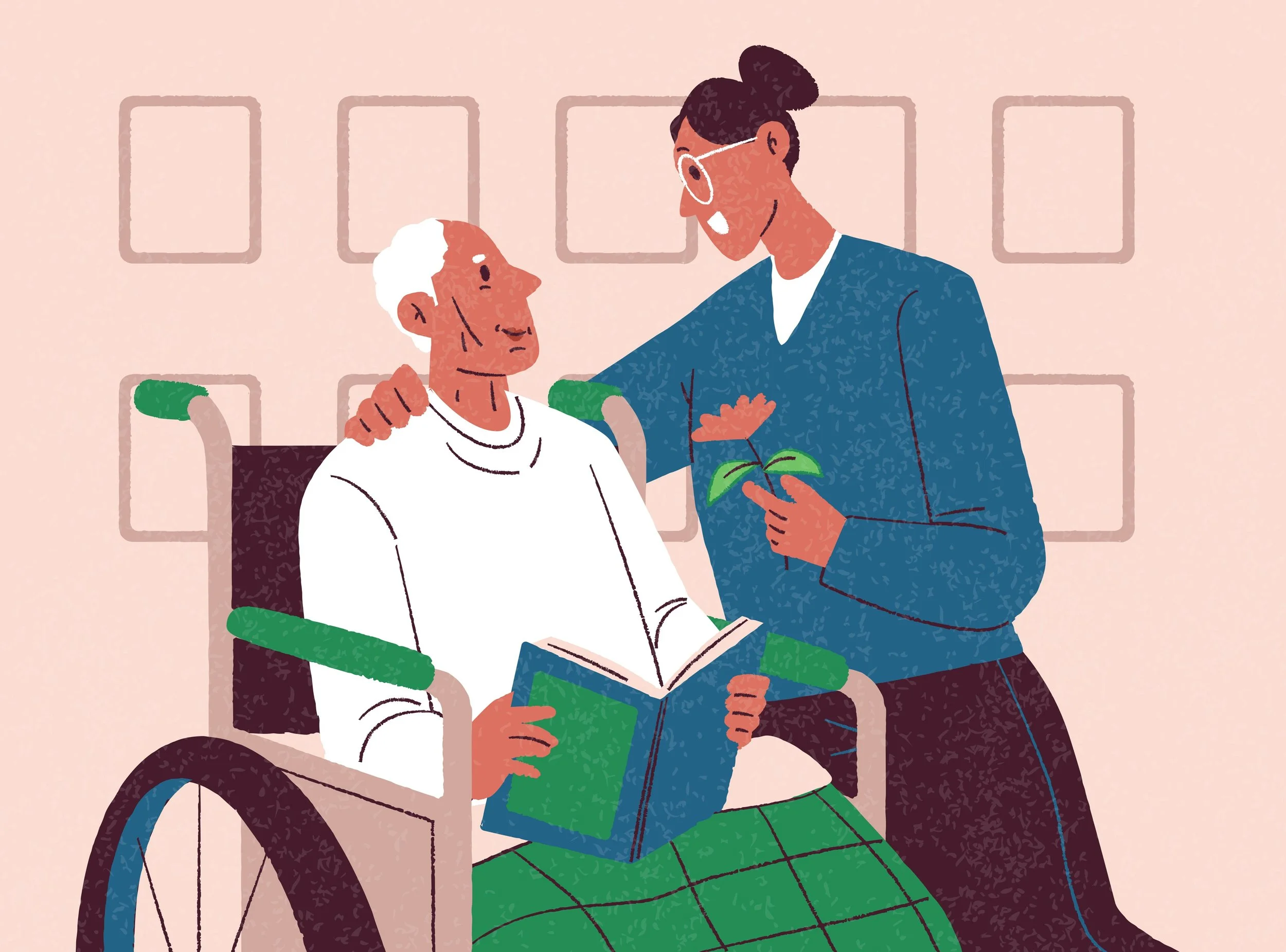
Someone who has worked inside the system, now working on your side of it.
And it isn't only cancer. Anyone with a complicated condition can end up lost in the same maze, which is what Solace is built for. Solace pairs you with a patient advocate, a real person who spent years inside the healthcare system and now works on your side of it, covered by insurance. They land the referral you've been waiting six months for. They find a new cardiologist when yours stops taking your plan. They line up the scans, the medications, the Meals on Wheels, and hand you back the hours you'd have spent on hold. One Solace patient put it about as plainly as it can be put: “Finally, someone who listens, understands my problem and I can speak with human to human.” That's the entire product. The technology finds you the right advocate and keeps the plan straight. The advocate does the truly human work of refusing to let you face the system alone.
None of this is free
Here's what keeps this from being a feel-good roundup. Every company I've named lives or dies on how it gets paid. Medicaid managed care. Medicare Advantage. Employer benefits. Grants. It takes more than good intentions to make care human at scale. It takes someone designing a model that works, and someone deciding to pay for the part of medicine that never fit neatly on an invoice.
Food as medicine is the clearest test of that. It's growing fast. About a dozen states now cover nutrition through Medicaid Section 1115 waivers. New York alone has pointed billions at food and other basic needs. A national food-as-medicine bill is moving through Congress. It's also fragile. Much of it rides on waivers that come up for renewal and can be cut, and the community groups packing those medically tailored meals know it. A benefit that one decision built, another decision can undo.
None of this is the easy path. Building technology that adds a human back into the loop, and paying for that human, is harder and less obviously profitable than building technology that takes one out. Even the strongest companies feel the strain: Papa, the companionship company, hit a rough patch a couple of years back and had to restructure, a reminder that being reliably there for people at scale is real, demanding work. But that difficulty is the reason the ones who get it right matter so much. They've shown that the humane version of healthcare and the scalable version don't have to be enemies, any more than "more human" and "more AI" were. The doula, the dietitian, the cancer navigator, the advocate: each now reaches people at a scale a lone practitioner never could, because a smart piece of software is handling everything that was never the human part. That reach is a purposeful design choice, and more of the system is making it every year.
So maybe we've been asking the wrong question about AI. We keep asking where a machine can replace a person. The better question, the one these companies are already answering, is where a person can hand the machine everything that was never the point, so they can get back to the part that always was.
“Where a person can hand the machine everything that was never the point, so they can get back to the part that always was.”
Which brings us back to the painting. No instruments, no chart, nowhere else to be. Just a doctor's full attention on the person in front of him. That same presence never left medicine. We just buried it under paperwork and screens and systems nobody can navigate alone. The best of these companies are digging it back out. And when they get it right, you won't notice the technology at all. You'll notice that someone's finally, fully there with you, wherever "there" turns out to be.
This is the work we do at Ember. Sarah and I started the firm because the best ideas in health, technology, public health strategy, data infrastructure, community care, tend to fall apart in the gap between what's technically possible and what actually helps a person. We live in that gap. If you're building something that has to work for real people, and you want a partner who won't lose sight of them, we should talk.
