
Why is it that so many promising ideas don’t quite make it? The pilot that proved out but never scaled. The platform that worked in a demo but stalled inside the health system. The community program with real results that couldn't find a sustainable home. The policy that was sound on paper but never translated into practice.
These ideas rarely fail because they were bad ideas. They fail at the seams: the places where healthcare delivery, public health, technology, community need, and the hard realities of implementation are supposed to meet, and don't quite line up.
We started Ember Consulting Group because we kept hearing the perspectives that could strengthen these solutions sitting right across the room from one another, never quite connecting.
The problem is usually diagnosed wrong
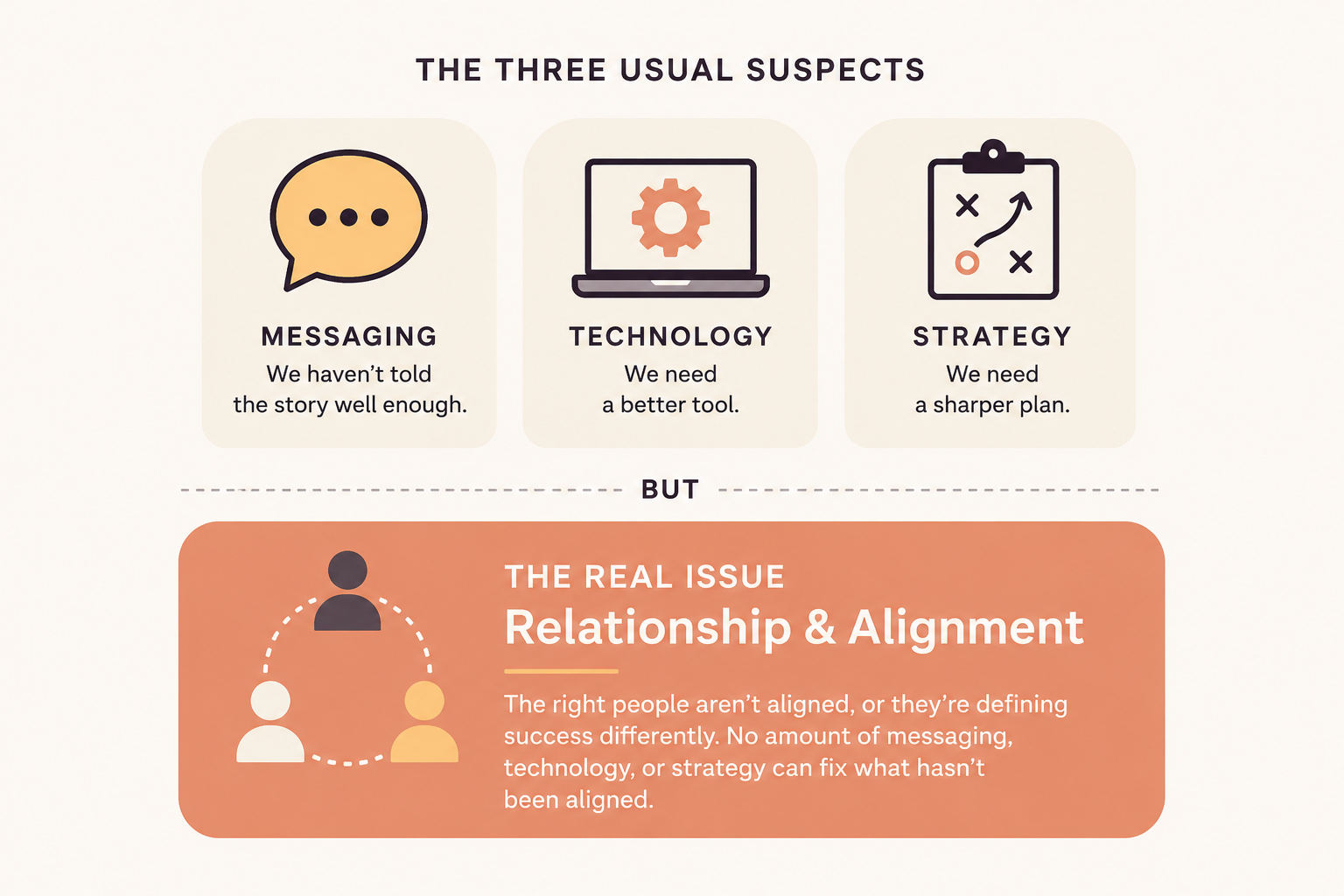
When an initiative stalls, organizations tend to reach for one of three explanations:
It must be a messaging problem, because we haven't told the story well enough.
Or a technology problem, because we need a better tool.
Or a strategy problem, because we need a sharper plan.
Sometimes that's true. But more often, the real obstacle is something less visible: it's a relationship and alignment problem. The right people aren't in the room, or they are in the room but holding different definitions of success. The clinician, the technologist, the public health official, the funder, and the community partner are each solving for something slightly different, and no amount of better messaging or better software resolves a misalignment that was never named out loud.
Health and public-impact work is unusually prone to this. The systems are complex, the incentives rarely point the same direction, and the people who have to say yes (and keep saying yes through implementation) sit in different sectors that don't share a vocabulary. Innovation gains traction when the seams are tended, when the right people, incentives, and realities are brought into alignment.
What we believe helps it move
Ember is a health innovation and public impact advisory firm. We help organizations make progress on exactly these kinds of complex challenges, working across the seams rather than pretending they aren't there.
What we've come to believe is straightforward:
Progress comes from combining strategic convening with practical advisory support, so the right people are aligned around the right decision at the right time.
Convening without follow-through produces a good conversation and little else. Advice without the right people in the room produces a plan no one owns. The two have to work together.
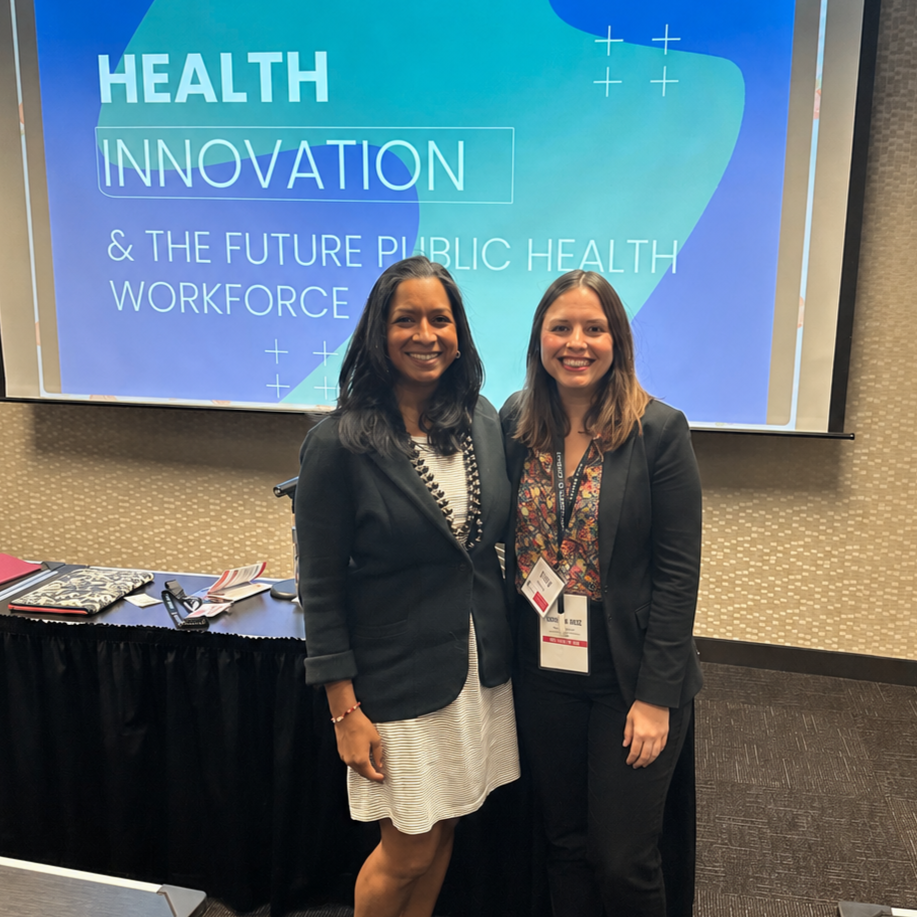
That conviction comes from our own story. One of us spent more than a decade in public health, working to protect and promote health at the population level, thinking in systems, in equity, in what it takes to reach people at scale. The other built a career in the private sector and in health innovation, convening Atlanta's health technology community and learning how new ideas actually get funded, built, and brought to market.
When our paths crossed, the pattern was hard to miss. At gathering after gathering, we kept meeting brilliant people working on the same fundamental goal of better health and wellness, from completely different angles, and largely in parallel. Public health over here. Health innovation over there. Same destination, different rooms, different language.
We also noticed what happened when those worlds did connect. The questions got sharper. One of us would ask something from a public health lens (about populations, equity, or implementation at scale) that made a product stronger. The other would ask something from an innovation lens (about funding, speed, or go-to-market) that made a program more durable. The gaps and the opportunities became visible precisely because we were looking from two directions at once.
That's the value of cross-pollination, and it's the premise of Ember: complementary knowledge, asked as better questions, applied at the seams where good ideas tend to get stuck.
With our perspectives combined, we can do more, better.
Complementary Founding Expertise
That is what Ember offers that a single-lens advisor cannot: two senior perspectives, public and private, in the same room from the start, asking the questions that surface blind spots early and make the work strong enough to survive implementation.
Four moves you can make now
Here are four moves that help, whatever you're working on:
Clarify the actual decision. Before convening anyone, get specific about what decision needs to be made, by when, and by whom. A surprising amount of stalled work is really a group of people circling a decision no one has named.
Map whose trust is required. List the people whose buy-in you genuinely need, both to approve the idea and to sustain it through implementation. Then ask honestly whose trust you have and whose you still need to earn.
Name the implementation constraints early. The budget cycle, the regulatory reality, the staffing limit, the data you don't actually have access to. Surfacing constraints early feels like slowing down. It's the opposite: it's how you build something that survives contact with the real world.
Translate the value for each audience. The same initiative means different things to a CFO, a clinician, a community partner, and a funder. Don't make them do the translation. Do it for them, in their terms.
None of these require a big budget. They require deciding to work across the seams on purpose.
Let's talk
If you're working on something promising that feels stuck at one of these seams, or you just want a thought partner who can see it from more than one angle, we'd welcome the conversation. No pitch, no pressure. Just a chance to think it through together.
That's the kind of work Ember was built for.